
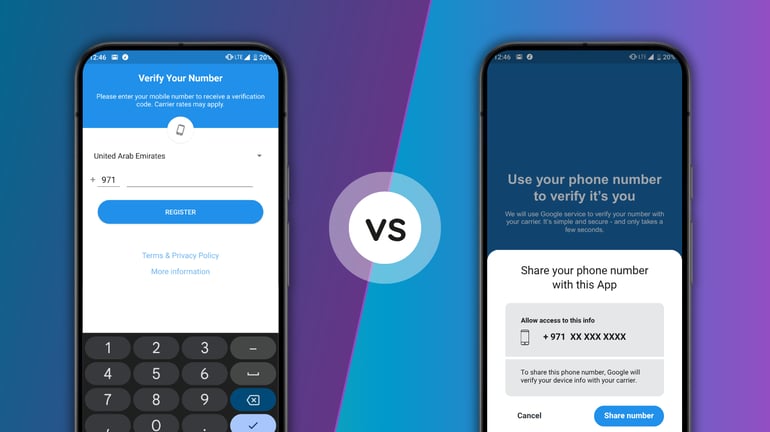
For years, SMS-based One-Time Passwords (OTP) were the default option when verifying your phone number, typically while signing up for a new app or logging into an account. However, there are newer, more secure ways of validating user’s numbers. Between rising security risks, delayed messages, and tough new global rules, businesses can no longer rely on text messages to confirm who their users are.
This is where Firebase Phone Number Verification (Firebase PNV) comes in. It is a modern, silent verification method that checks your identity directly through your mobile network.
What is Firebase Phone Number Verification?
Firebase Phone Number Verification is a streamlined authentication method developed within Google’s Firebase ecosystem. Instead of sending a multi-digit code via SMS that users have to copy and paste, Firebase PNV works quietly in the background. It silently verifies that an active SIM card matches the claimed mobile number directly through your mobile network provider.
Because it gets the answer straight from the carrier (the ultimate source of truth), it instantly proves you have the phone in hand. That means no manual data entry, no delivery delays, and no human error.

Why Are SMS OTP and Other Number Verification Methods Failing?
Traditional SMS OTP authentication is failing across three major fronts: security, user experience, and regulatory compliance.
- Simple User Error:
The most obvious flaw is how easily human error gets in the way. Users frequently make typos when entering their phone numbers during sign-up, meaning the verification code is sent into the void. - Growing Security Risks:
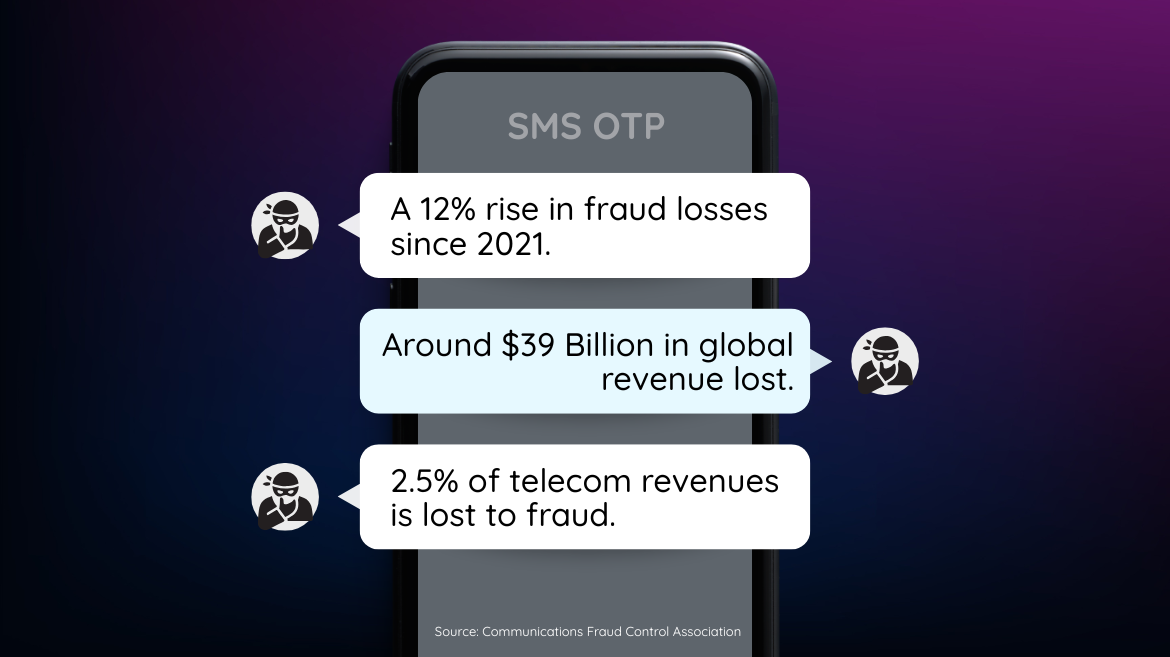
SMS is increasingly exploited by bad actors engaging in SIM swapping, intercepting malware, smishing, and artificially inflated traffic, a fraud scheme that is estimated to cost the telecom industry nearly $40 billion annually. - Global Regulatory Restrictions:
Because of these structural flaws, governments and financial regulators worldwide are actively restricting or outright banning SMS OTP:
・ UAE: The Central Bank of the UAE mandated a full phase-out of SMS OTP for banking transactions, shifting liability directly onto institutions using legacy text codes.
・ India: The Reserve Bank of India has banned standalone SMS OTP in favor of phishing-resistant authentication frameworks.
・ Southeast Asia: Regulators in Singapore, Malaysia, and the Philippines have ordered financial institutions to migrate away from text-based verification following severe phishing outbreaks.
・ United States: Standard bodies like NIST (SP 800-63-4) officially classify SMS as a "restricted" authenticator, leading major federal and financial platforms to retire the option. - Other Verification Alternatives Aren't Ready Either:
Alternative verification methods fail to offer a complete solution. Passkeys and authenticator apps cause technical fragmentation on older phones. Social sign-in and email magic links introduce data privacy concerns and rely heavily on third-party platforms. Furthermore, almost all alternatives depend on internet connections and suffer from high drop-off rates.
The Big Benefits of Switching to Firebase Phone Number Verification
- Drastic Reduction in User Drop-Off:
Industry data from major networks like Orange shows that up to 23% of people give up on an app simply because their verification text never arrived. Firebase Phone Number slashes the sign-up process from 23 long steps down to just 6, cutting wait times from 2 minutes to under 30 seconds. - Verification Anywhere:
Traditional SMS fails without a cellular network, and older CAMARA Number Verification forces users off Wi-Fi onto mobile data. Firebase PNV works over Wi-Fi or cellular data, allowing users to verify securely from anywhere, even over in-flight Wi-Fi. - Huge Savings on Fraud:
Businesses eliminate exposure to SMS phishing attacks and AIT fraud, saving millions in fraudulent operational losses and SMS delivery fees. - Recapturing Authentication Revenue:
As apps drift away from SMS OTP toward alternative authentication methods, carriers lose valuable revenue. Firebase Phone Number Verification gives carriers an opportunity to recover that lost revenue and monetise their network infrastructure with a highly scalable and secure authentication API.
However, Firebase Phone Number Verification Needs an Entitlement Server
To make this silent check work across millions of different devices, carriers need an Entitlement Server. Using the industry-standard GSMA TS.43 protocol, the Entitlement Server acts as a single, secure front door into the carrier network. When an app requests verification, the server checks the SIM inside the phone to retrieve the phone number and prove ownership in real-time, ensuring the number cannot be spoofed, cloned, or hijacked.
Note: Firebase PNV is available on Android today, with iOS support coming soon.
Modernise Your Identity Verification with NetLync’s EaaS®
As carriers operate wireless networks and other critical infrastructure, they are held to rigorous regulatory standards and are uniquely positioned to serve as the foundation for digital identity. SMS OTP is quickly becoming obsolete, and users are demanding frictionless experiences. Carriers can therefore provide a more secure, reliable authentication alternative to third-party services via Firebase Phone Number Verification.
If you are interested in streamlining your subscriber verification, we are here to help. Contact NetLync today to learn more about Entitlements-as-a-Service® (EaaS®) and see how you can integrate Phone Number Verification APIs within 6 weeks!